Podium 01
社區PSA篩檢追蹤依從性的最佳篩檢站距離:來自臺灣的五年真實世界研究
蘇劭臻1 林益聖1 許兆畬1 歐宴泉1 童敏哲1
1童綜合醫療社團法人童綜合醫院 外科部 泌尿科
Optimal travel distance for follow-up adherence after community-based PSA screening: A 5-year real-world study from Taiwan
Shao-Chen Su1 Yi-Sheng Lin1 Chao-Yu Hsu1 Yen-Chuan Ou1 Min-Che Tung1
1Division of Urology, Department of Surgery, Tungs' Taichung Metroharbor hospital
Purpose: PSA screening is common in both community and hospital settings, yet the effect of geographic accessibility on follow-up remains unclear. Understanding how distance influences follow-up may help optimize the placement of screening stations.
Materials and Methods: We retrospectively analyzed a single-institution PSA screening database from 2019 to 2024. Each screening site was linked to its distance (kilometers) and travel time (minutes) from the reference hospital. Follow-up was defined as any urologic evaluation after a positive screening. Univariable logistic regression and restricted cubic splines (RCS) were used to assess the association between distance and follow-up probability. Model discrimination was evaluated using the area under the receiver operating characteristic curve (AUC). Sensitivity analyses with travel time were also performed.
Results: During the 5-year study period, 5567 men underwent PSA screening, and 622 were found to have abnormal results. The overall follow-up rate was 30.2%, while the median distance was 26.8 km. Increasing distance to the screening site was significantly associated with reduced follow-up compliance (β = –0.039, SE = 0.0048, p < 0.001), with each additional kilometer corresponding to a 3.8% decrease in the odds of returning (OR 0.96, 95% CI 0.95–0.97). Restricted cubic spline analysis demonstrated a nonlinear decline, and segmented regression identified a breakpoint at 18.9 km (95% CI 12.0–25.8), beyond which adherence dropped markedly. Model discrimination was fair (AUC = 0.741), indicating adequate predictive accuracy for follow-up adherence. Sensitivity analyses using travel time yielded consistent results.
Conclusions: In Taiwan, follow-up adherence declined sharply beyond 18.9 km, implying the need to consider geographic factors in prostate cancer screening policy. Further research controlling socioeconomic and healthcare access factors is warranted.
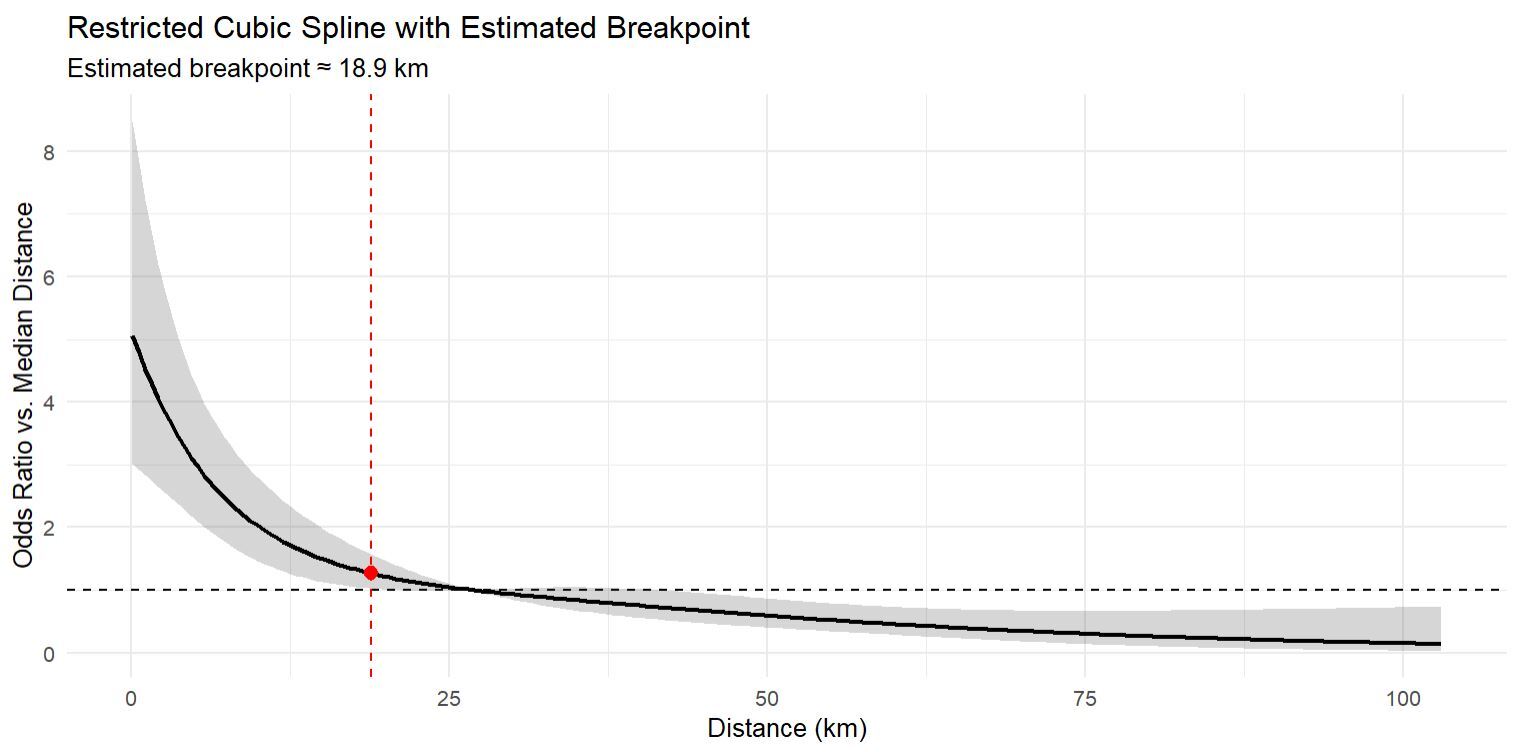
Figure 1. Restricted cubic spline analysis showing a nonlinear decline in follow-up adherence with increasing travel distance, with a breakpoint at 18.9 km.
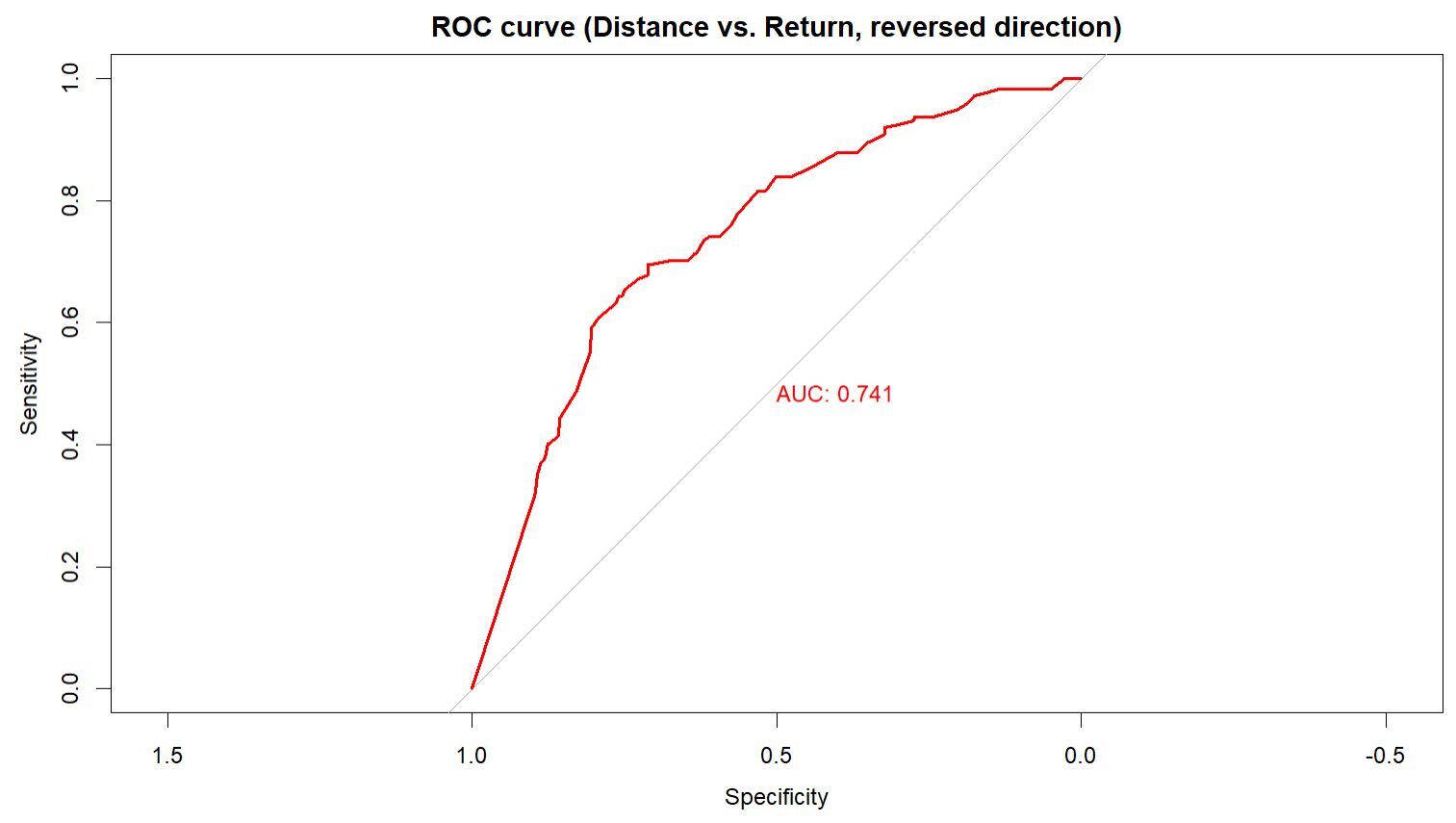
Figure 2. ROC curve demonstrating fair discrimination of travel distance for predicting follow-up adherence (AUC = 0.741).