Podium 01
中文題目後脛神經電刺激治療機器人輔助攝護腺全切除術後尿失禁之療效評估:前瞻性研究初步結果
許哲元、林益聖、許兆畬、歐宴泉、童敏哲
童綜合醫療社團法人童綜合醫院外科部泌尿科
A Prospective Study on the Efficacy of Posterior Tibial Nerve Stimulation in Managing Post-Prostatectomy Incontinence: Interim Findings.
Jhe-Yuan Hsu, Yi-Sheng Lin, Chao-Yu Hsu, Yen-Chuan Ou, Min-Che Tung
Division of Urology, Department of Surgery, Tungs' Taichung MetroHarbor Hospital
Purpose:
Post-prostatectomy incontinence (PPI) is a frequent complication after robot-assisted radical prostatectomy (RaRP) and significantly impairs quality of life. Pelvic floor muscle training (PFMT) is standard first-line therapy, but recovery is often delayed. Posterior Tibial nerve stimulation (PTNS) modulates lower urinary tract function via sacral pathways and may accelerate recovery. This study evaluated the efficacy of transcutaneous posterior tibial nerve stimulation (T-PTNS) combined with PFMT on continence and patient-reported outcomes in men with PPI after RaRP.
Materials and Methods:
We conducted a prospective observational study of men with persistent incontinence after RaRP. All patients received T-PTNS in addition to PFMT and were followed at outpatient visits. Each visit included a 1-hour pad test and three questionnaires: Overactive Bladder Symptom Score (OABSS, 0–15), Urogenital Distress Inventory-6 (UDI-6, 0–18), and Incontinence Impact Questionnaire-7 (IIQ-7, 0–21). Outcomes were assessed by changes from baseline to last follow-up. Endpoints included social continence (<3 g), ≥50% pad reduction, and questionnaire improvement. Wilcoxon signed-rank tests were applied, with p<0.05 significant.
Results:
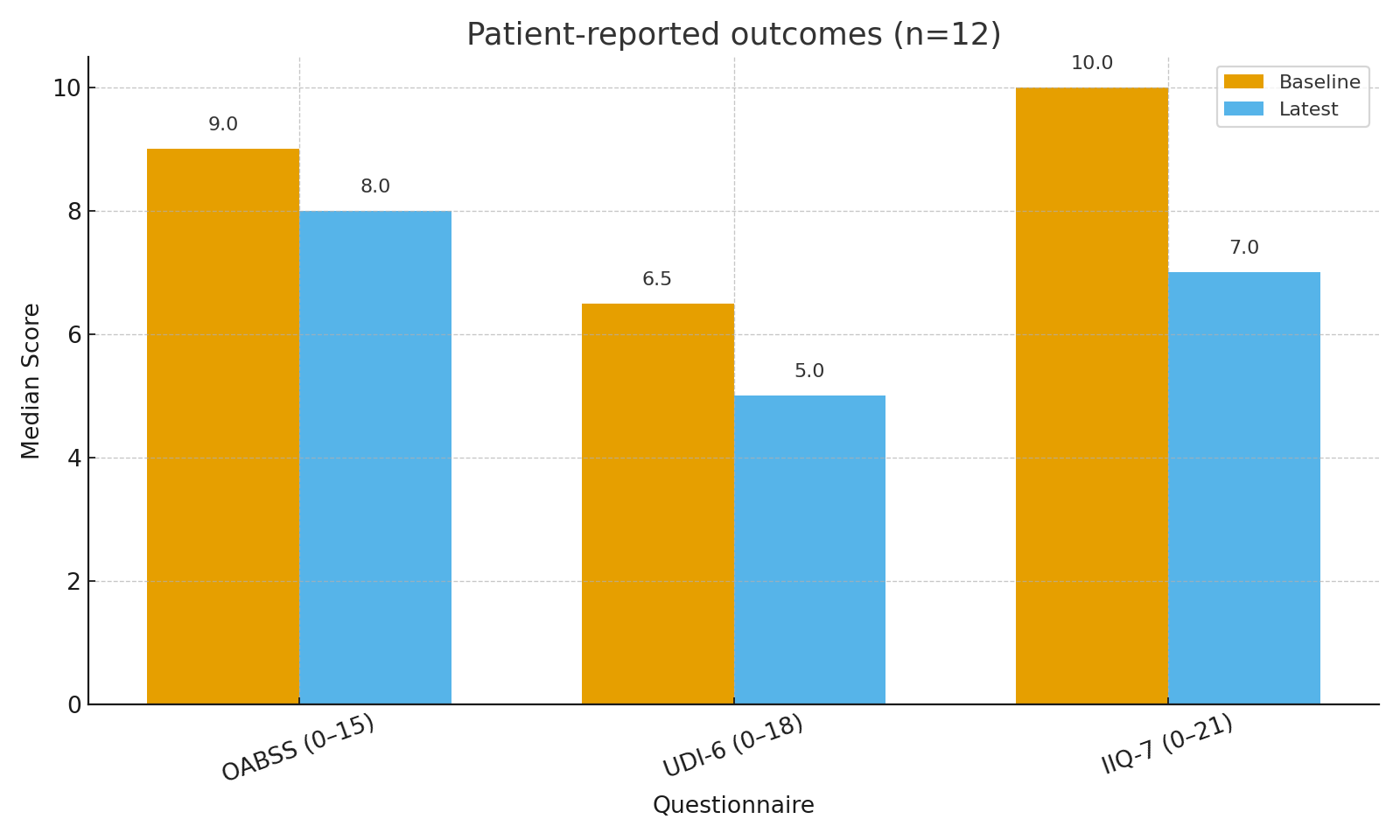
Twelve men were enrolled; 11 had paired pad test data. Median pad weight fell from 67.3 g to 4.7 g (−63.4%, p=0.147). Four of 11 (36%) achieved <3 g, and six (55%) achieved <10 g or ≥50% reduction. Responses varied, with some showing rapid improvement to near-dry status, while others had persistent leakage. Patient-reported outcomes reflected these patterns. OABSS changed from 9.0 to 8.0 (p=0.858). UDI-6 improved from 6.5 to 5.0 (p=0.027), showing reduced distress. IIQ-7 improved from 10.0 to 7.0 (p=0.476), suggesting better quality of life but not significant. Overall, more than half achieved meaningful continence gains and symptomatic relief within short follow-up.
Conclusion:
T-PTNS plus PFMT showed encouraging early benefits in men with PPI after RaRP, particularly in symptom relief and continence recovery.
Figure 1. Comparison of Baseline and Follow-up Questionnaire Scores